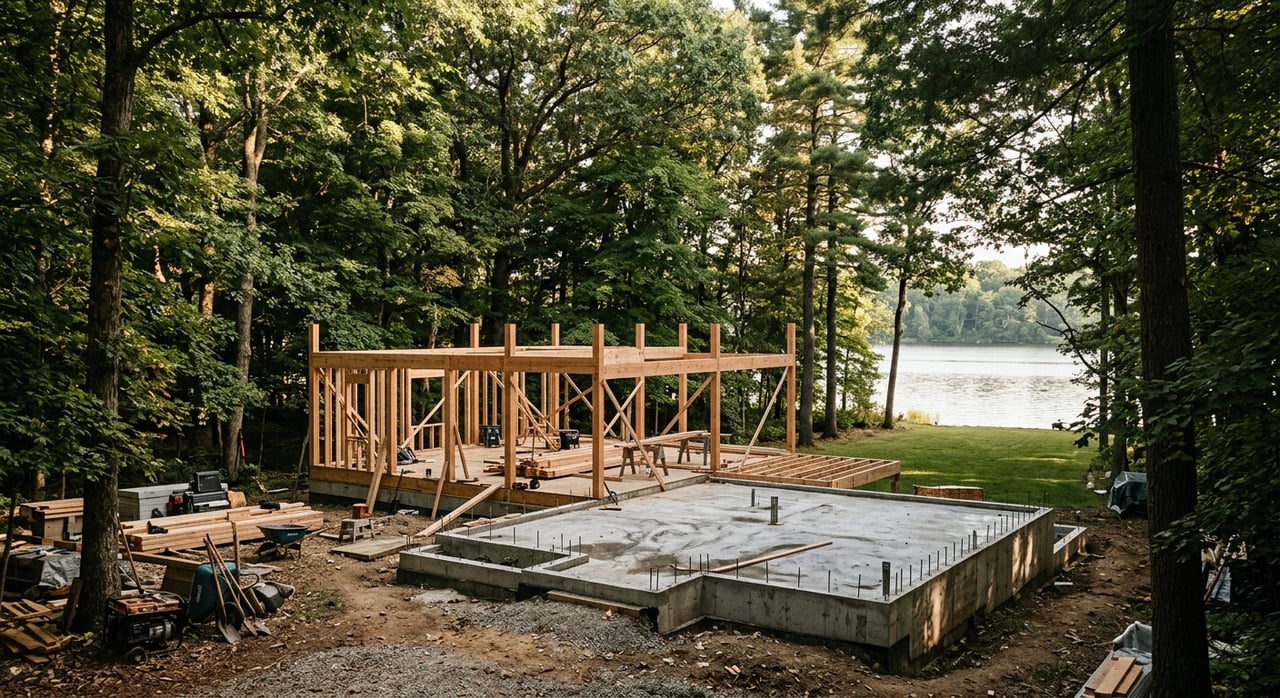
Thinking about building near Lake Oconee? A beautiful floor plan is only part of the decision. If you want to build a custom home near White Plains, the real work starts with the lot, the shoreline rules, and the county approvals that shape what is actually possible. This guide will help you understand the key steps, common constraints, and smart planning moves so you can make better decisions before you build. Let’s dive in.
Why Lake Oconee Building Takes Extra Planning
Building a custom home near White Plains is different from building on a typical inland lot. In this part of Greene County, your project may be shaped by county zoning, septic requirements, shoreline frontage, and Georgia Power rules if the property touches Lake Oconee.
That matters because the home site, the water access, and the future dock plan all affect one another. A lot that looks ideal at first glance may have limits that change where you can build, how much land is usable, or whether certain shoreline improvements are even allowed.
Greene County also places Lake Oconee in a strong local market context. County materials note continued strength through 2025, especially in lakefront communities, golf course developments, and active-adult neighborhoods. At the same time, higher land values and rising replacement costs mean mistakes during lot selection can get expensive quickly.
Start With Lot Feasibility
Before you spend much time on house design, confirm what kind of lot you are buying and what it can support. This is one of the most important early steps in any custom build near Lake Oconee.
Georgia Power distinguishes between residential lease lots, access lots, and private-owned lots. Each one comes with different ownership and use rules, and those rules can affect shoreline access, structure placement, and transfer timing.
On a residential lease lot, Georgia Power owns the land while the lessee owns the improvements. On an access lot, Georgia Power owns the strip between the lake and the private parcel, and improvements cannot cross that boundary. Even on a private-owned lot, project-boundary rights or flood rights and easements may still limit what you can build near the water.
Why ownership type matters
The ownership structure affects more than paperwork. It can influence whether a shoreline permit can be issued, whether an updated survey is needed, and how quickly you can move forward after closing.
If the property is a Georgia Power lease lot or access lot, Georgia Power says it will not issue permits to new owners or validate shoreline structures until the correct legal agreement is signed. In some cases, transfer or renewal can take several weeks and may require an updated as-built survey.
Check Zoning, Septic, and Usable Area
A lot’s advertised acreage does not always equal buildable area. In Greene County, zoning and septic feasibility can reduce the usable footprint in ways that are easy to miss if you only look at the listing photos.
Greene County’s LR1 lakeshore district is intended for low- to medium-density single-family development and is designed to preserve shoreline character. For lots near Lake Oconee that rely on on-site sewage systems, the county says lot-size calculations exclude the portion within 75 feet of the high-water line.
That means your lakefront lot may offer less practical building area than you expect. The zoning board may also increase lot-size requirements to accommodate septic tanks and wells, and if public water or sewer is unavailable, development that cannot use septic may be precluded.
What to verify early
Before moving ahead, make sure you understand:
- The zoning classification of the lot
- Whether public water or sewer is available
- Whether the lot will require septic
- How the 75-foot high-water-line rule affects usable area
- Whether slope, floodplain, or buffers limit building placement
Shoreline Frontage Can Change Your Plans
If your dream includes a private dock or boat access, shoreline frontage deserves close attention. This is not a detail to figure out later.
Georgia Power says lots platted after 2000 generally need at least 100 feet of straight-line shoreline and 100 feet at the project boundary to qualify for shoreline structures other than a seawall. Older lots may be measured under different thresholds.
Lake Oconee also has lake-specific rules for docks. Georgia Power states that Lake Oconee permits only a single boatslip configuration of 16 by 32 feet off a private residence dock, and it is the only Georgia Power lake that permits free-standing boatlifts.
Why frontage should shape lot selection
Those standards can directly affect value and usability. If waterfront access is a major part of your plan, you should confirm the shoreline geometry before you buy, not after your home plans are drawn.
A lot with limited frontage, unusual shoreline shape, or project-boundary restrictions may still be attractive, but it may not support the same dock setup or water-access vision as another parcel nearby.
The Survey and Site Plan Are Critical
In a custom build near White Plains, the survey is not just a formality. It is one of the main tools that tells you whether your home, driveway, septic area, and shoreline improvements can work together on the lot.
Greene County requires a site plan drawn by a licensed surveyor for permit applications. The zoning documentation should show driveways, building locations, streets or rights-of-way, floodplain, acreage, and setbacks and buffers.
This is where many buyers get clarity. A proper survey and conceptual site plan can reveal whether the lot’s shape, slope, access, and shoreline layout support the custom home you want to build.
Understand the Permit Sequence
A successful build near Lake Oconee usually involves more than one approval path. You may need county permits, land-disturbance approvals, septic documentation, driveway approval, and separate shoreline review through Georgia Power.
Greene County’s checklist for a new single-family home calls for a completed residential permit packet, hard-copy and PDF plan submissions, septic system permit documentation, contractor license information, and a driveway permit if applicable. The county also requires a Notice of Intent to be submitted to GEOS for land disturbance.
The county notes that the permit card must be posted at the driveway entrance for inspections to occur. That may sound minor, but it reflects how structured the process is from the very beginning.
Don’t start site work too soon
Greene County’s Erosion Control Division oversees plan review and permitting for land disturbance and protects buffers along state waters. The county specifically warns that unpermitted land-disturbing activity can trigger an immediate stop-work order.
That includes work such as cutting basements, cutting footings, or hauling dirt between lots without a land-disturbance permit. In other words, grading and clearing should follow the approved permitting sequence, not happen ahead of it.
Driveway and Access Rules Matter Too
Driveway planning often gets less attention than house design, but access can affect both timing and cost. Greene County requires a driveway permit for any new driveway that intersects a public or state right-of-way.
The county handles county-road cases, while GDOT handles state-highway cases. Greene County also notes that driveway pipes and related drainage issues on private property are generally the owner’s responsibility.
If your lot has slope challenges or a long approach from the road, this can become an important budget item early in the process.
Waterfront Approval Needs Separate Coordination
If the lot touches Lake Oconee, county approval is only part of the picture. Georgia Power has its own shoreline application and documentation requirements for waterfront construction.
Its checklist asks for the county building permit, county-approved septic tank permit, land-disturbance permit if applicable, erosion and sediment control plan, contractor certification, floor plan, landscape or revegetation plan, and a site plan.
Georgia Power also states that new structures, additions, and rebuilds should be located outside the project boundary where possible and must meet county setback rules. If your plans change after approval, those changes must also be approved by Georgia Power.
Build the Right Team Early
A well-planned custom project usually starts with the right specialists in the right order. Near White Plains and Lake Oconee, local experience matters because the paperwork and planning must satisfy both county and shoreline requirements.
A practical team often includes:
- A licensed surveyor
- A designer or architect
- A builder familiar with local permitting
- A lender who understands construction financing
- A real estate advisor who can help evaluate lot value and feasibility before purchase
Greene County points buyers to the Lake Oconee Builders Association for referrals to builders, engineers, and contractors. Even so, your first line of protection is careful lot analysis before you commit.
Budget Beyond the Floor Plan
Many buyers focus first on finishes, square footage, and view lines. Those matter, but at Lake Oconee, the lot itself can drive budget decisions just as much as the home design.
Greene County’s market overview says lakefront and golf properties continue to command some of the highest sale prices in Georgia. The same report notes that replacement costs for residential construction have risen alongside higher land values and limited inventory.
That means the full project budget should account for more than the build contract. Shoreline geometry, septic feasibility, utility access, driveway work, earthwork, and erosion control can all influence the final number.
Budget items buyers often overlook
When planning a custom build, remember to account for:
- Survey and site-plan preparation
- Septic review and possible lot limitations
- Driveway access work and drainage solutions
- Land-disturbance permitting and erosion-control measures
- Shoreline application documents and revisions
- Dock-related design limits tied to frontage
- Cash reserves for changes or delays during construction
Financing a Custom Build
Construction financing works differently from a standard purchase mortgage, so it helps to discuss the structure early. The key term many buyers will hear is construction-to-permanent financing.
The general idea is simple: the project begins with a construction phase, then converts to a long-term mortgage if the loan structure allows for it. Some loans may convert automatically, while others may require a new application at the next stage.
For buyers, the practical takeaway is timing. Your lender may need confirmation that the finished home matches approved plans and is ready for occupancy before the permanent loan is finalized.
Why Appraisal-Informed Guidance Helps
When you are buying land and planning a custom home, valuation is not just about today’s asking price. It is also about understanding how lot type, shoreline rights, frontage, and build constraints affect the property’s real-world utility and long-term market position.
That is especially true in the Lake Oconee market, where county data shows strong demand and premium pricing in lakefront segments. A careful, appraisal-informed approach can help you compare parcels more clearly and avoid overpaying for a lot that does not support your goals.
If you are considering building a custom Lake Oconee home near White Plains, the smartest first move is often to evaluate the lot before you fall in love with the plans. The right guidance can help you weigh shoreline rules, site feasibility, and market value together so your project starts on solid ground. When you are ready to explore lots, waterfront opportunities, or new construction decisions around Lake Oconee, connect with The Howard McMichael Team for appraisal-backed local guidance.
FAQs
What should you check before buying a lake lot near White Plains?
- You should confirm the lot type, zoning, septic feasibility, shoreline frontage, project-boundary limits, and whether the site plan can support your intended home and water-access features.
How do Georgia Power rules affect a Lake Oconee custom build?
- Georgia Power rules can affect shoreline structures, dock configuration, project-boundary setbacks, permit timing, and whether a lease or access agreement must be completed before approvals move forward.
Does Greene County require a survey for a new custom home?
- Yes. Greene County requires a site plan drawn by a licensed surveyor for permit applications, and that plan should show items such as driveways, building locations, floodplain, setbacks, and buffers.
Can septic rules reduce the usable size of a Lake Oconee lot?
- Yes. In Greene County, for lots near Lake Oconee with on-site sewage systems, the portion within 75 feet of the high-water line is excluded from lot-size calculations.
Do you need separate approvals for the house and the shoreline work?
- Yes. A waterfront build may require county approvals for the home and site work, plus separate shoreline documentation and approval through Georgia Power.
Why is lot analysis so important before designing the house?
- Lot analysis helps you understand whether the parcel’s access, slope, septic layout, shoreline geometry, and permit requirements can support the custom home and dock plan you want.