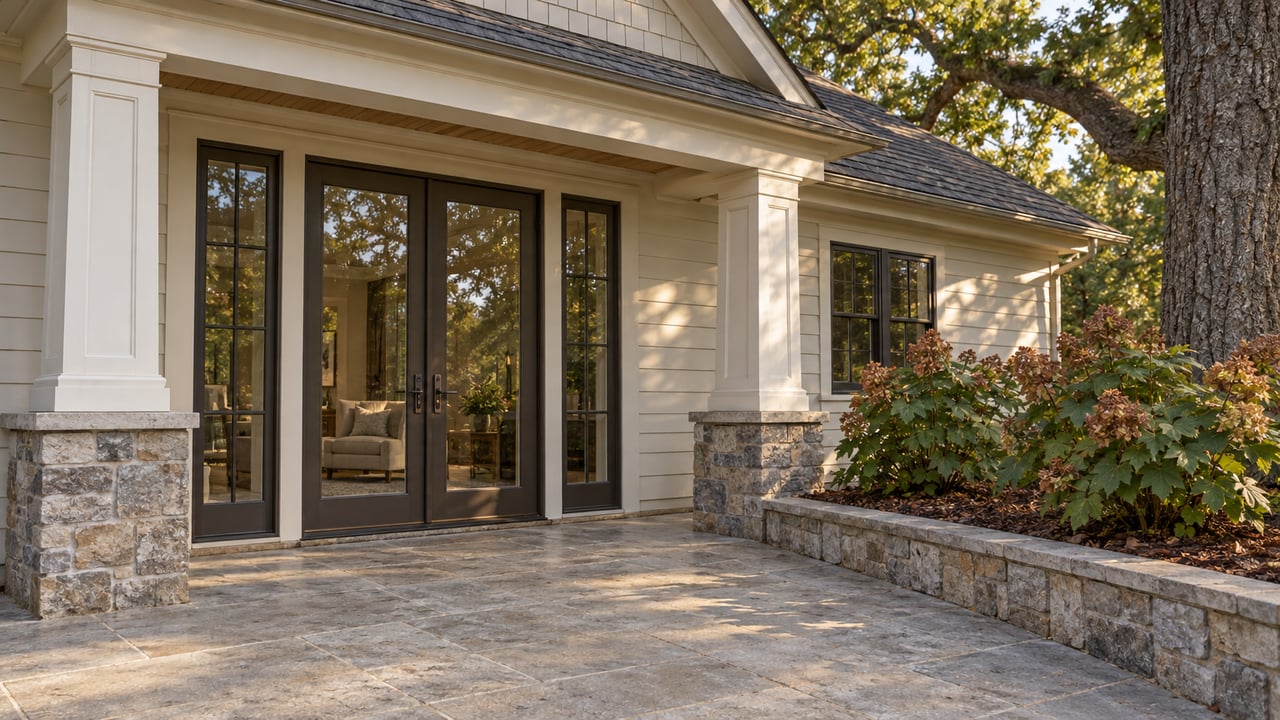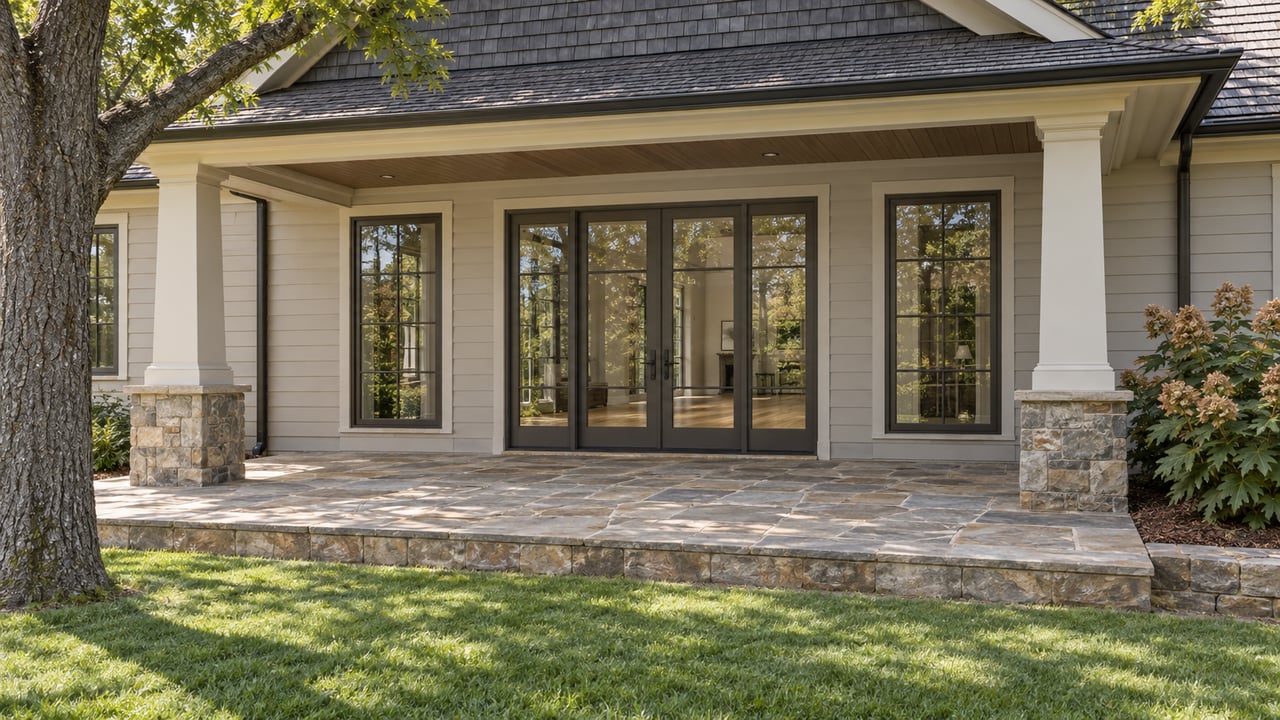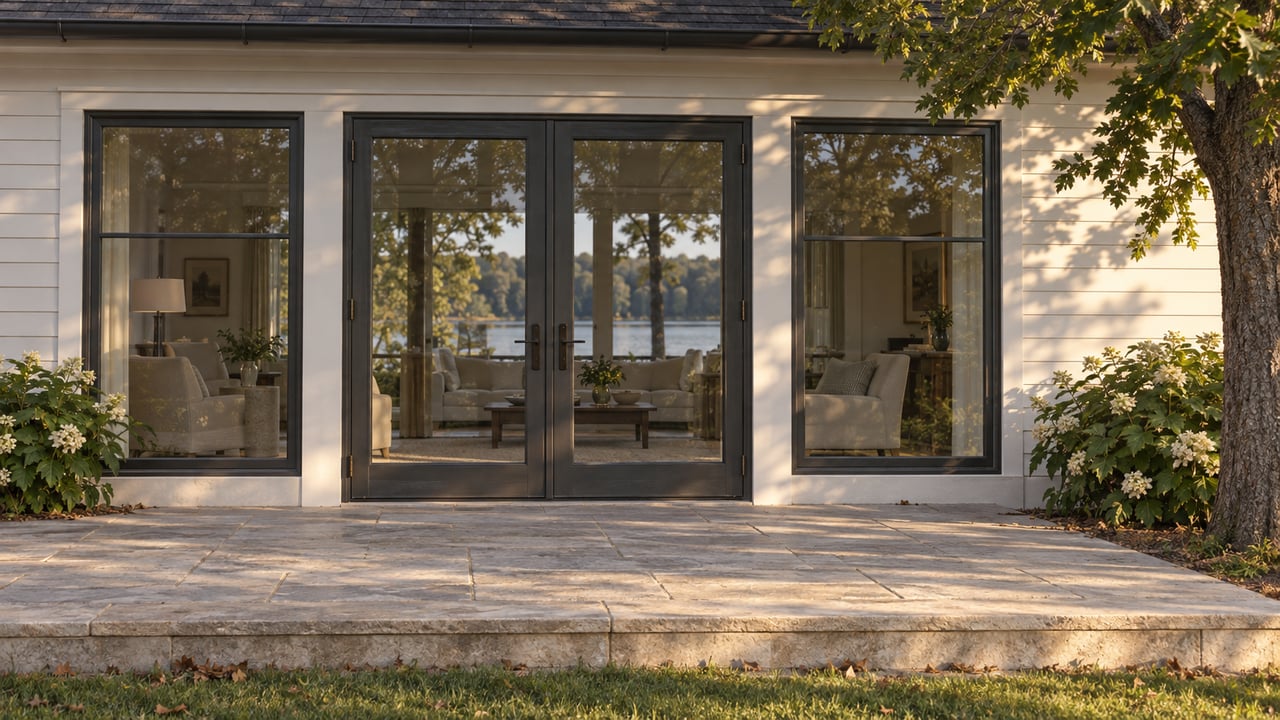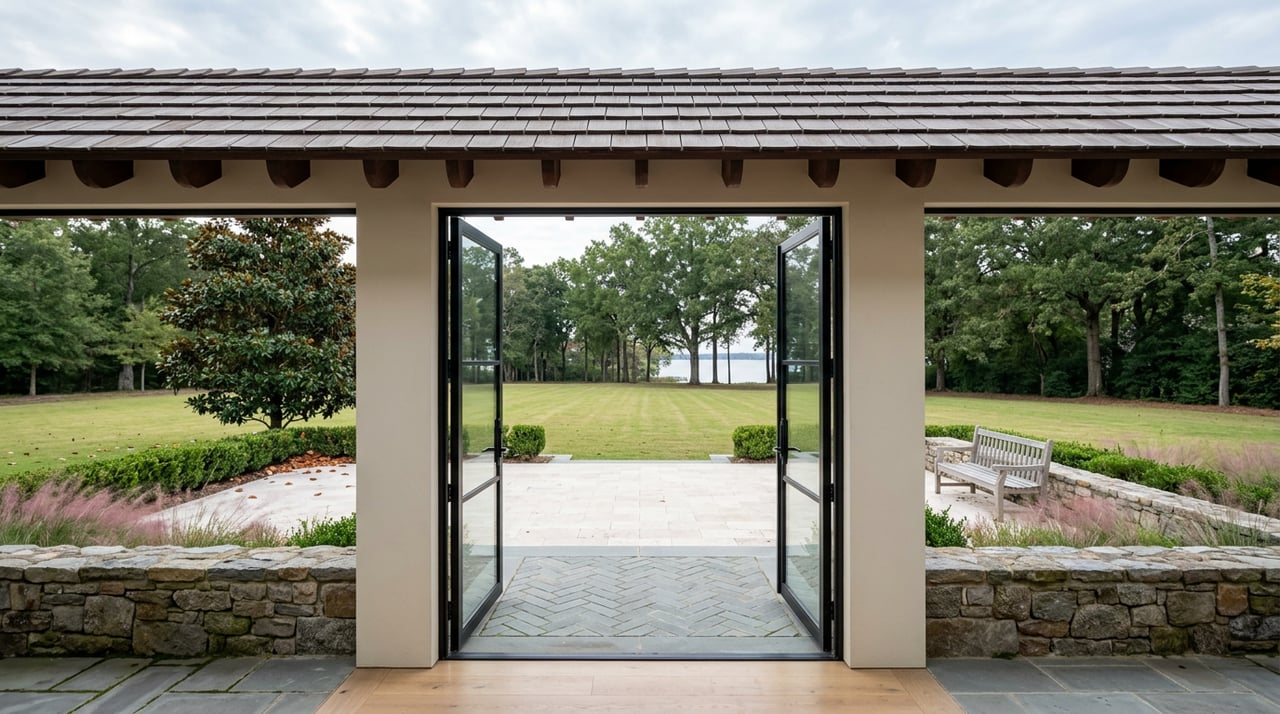
A waterfront listing on the market this month describes a deep-water cove property on the Eatonton side of Lake Oconee. Two hundred ninety-six feet of shoreline, a private sandy beach, west-facing sunset views. Buried in the listing copy, alongside the granite counters and the walk-in pantry, sits a detail that has nothing to do with the house itself: a Putnam County short-term rental license number. The listing agent adds, almost in passing, that permits like it are getting harder to come by.
That single line is worth more to a buyer than the square footage. It tells you that on Lake Oconee, the right to rent your own home by the week isn't a feature of the house. It's a feature of the county the house happens to sit in.
The lake has one shoreline and two governments
Lake Oconee runs through Greene, Putnam, and Morgan counties, but the two towns that anchor the market are Greensboro on the Greene County side and Eatonton on the Putnam County side. Buyers treat "Lake Oconee real estate" as a single market with a single set of rules. It isn't. Cross the county line and you cross into a different rental code, administered by a different board, with a different history of who was allowed to apply and when.
Greene County requires a property to sit inside a designated Short-Term Rental Overlay District before an owner can even apply for a business license. If your parcel isn't in the overlay, short-term rental use isn't on the table until you request a rezoning. Once you're licensed, the permit expires every December 31 and has to be renewed annually. Operate without one and the county's ordinance sets the penalty at $1,000.
Putnam County runs a separate system built around a short-term vacation rental certificate, paired with an occupation tax certificate and payment of hotel-motel taxes. The county's Board of Commissioners held a public hearing on September 1, 2023 specifically to adopt new rental ordinances and lift a moratorium that had frozen new applications up to that point. In plain terms: for a stretch of time, if you didn't already hold a certificate on the Eatonton side, you couldn't get one, no matter how qualified your property was.
Here's what that means for a buyer comparing two homes on paper. A $1.2 million waterfront property in Greensboro and a $1.2 million waterfront property in Eatonton can look identical in the listing photos and behave completely differently the day you try to put either one on a booking platform.
| Greensboro side (Greene County) | Eatonton side (Putnam County) | |
|---|---|---|
| Governing mechanism | Short-Term Rental Overlay District plus annual business license | Short-term vacation rental certificate plus occupation tax certificate |
| License renewal | Annually, expires every December 31 | Certificate-based, no fixed renewal date published |
| Recent history | Overlay system currently in effect | Application moratorium in place until lifted by ordinance on September 1, 2023 |
| Penalty for operating unlicensed | $1,000 per violation | Putnam County ordinance: Certificate can be revoked; owner has 30 days to appeal to the County Manager |
| Where to verify | Greene County Building & Zoning | Putnam County Planning & Development |
Check community rules too
If you're buying in a community with its own architectural review board and membership structure, ask the club directly about its rental rules as well as the county's.
The county-line dynamic matters most outside the gates: the older lakefront streets, the non-HOA waterfront lots, and the mixed communities. That's precisely where a $399,000 lake-access cottage and a multi-million-dollar deep-water estate can sit two streets apart, and where the difference between a rental-eligible parcel and a rental-ineligible one has nothing to do with price.
Why the average sale price hides this
Lake Oconee's waterfront market has been running close to a $1.8 million average sale price with homes moving in roughly ten days on market this year, a pace that reflects genuinely tight inventory rather than a market that rewards guesswork. When homes move that quickly, buyers lean on comparables and instinct rather than a parcel-by-parcel check of overlay maps and certificate status. That's exactly the environment where a rental-rights mismatch slips through. Two comps that look interchangeable in a market analysis can carry very different rental optionality, and that optionality is part of what a buyer is actually paying for if a second-home purchase is meant to offset its own carrying costs.
This is also why a raw price-per-square-foot comparison between the Greensboro side and the Eatonton side tells you less than it seems to. A slightly lower price on the Eatonton side isn't automatically a bargain if the parcel sits outside any active certificate and a new application would be competing in a system that was, until recently, closed to new entrants. Likewise, a slightly higher price in a Greensboro overlay district isn't overpriced if it comes with a license that's already active and simply needs annual renewal rather than a fresh application.
What to confirm before you write an offer
A few questions worth asking directly, before earnest money changes hands:
- Does the parcel sit inside a Greene County Short-Term Rental Overlay District, or would short-term use require a rezoning first?
- On the Putnam County side, does the property hold an active vacation rental certificate, and does that certificate transfer with the sale or does a new owner need to reapply?
- Is the community itself gated or covenant-restricted in a way that overrides whatever the county allows?
- If the seller is marketing an active license as a selling point, has that license actually been verified with the county rather than taken at face value from the listing?
None of these questions show up in a standard market analysis. They show up when someone who understands both the appraisal side and the local zoning history sits down with the parcel number and checks.
Where appraisal-backed pricing earns its keep
An appraisal that treats two waterfront homes as equivalent because they share square footage, frontage, and a similar dock only tells part of the story on this lake. The rental-rights layer sits underneath the physical comparables, and it can move what a property is actually worth to a buyer who wants the flexibility to rent it, even occasionally, without pretending it's something else. That's the kind of detail a certified general appraiser is trained to flag rather than assume away, and it's the difference between a valuation built on square footage and one built on what the property can actually do for its owner.
If you're comparing homes on either side of the Lake Oconee county line and want a valuation that accounts for what the parcel is actually zoned and certified to do, not just what it looks like in photos, The Howard McMichael Team can walk the county records with you before you write an offer. Request an appraisal-backed home valuation and get the answer in writing, not in a listing description.
This article is general information, not legal, tax or financial advice. Consult a qualified professional about your situation.