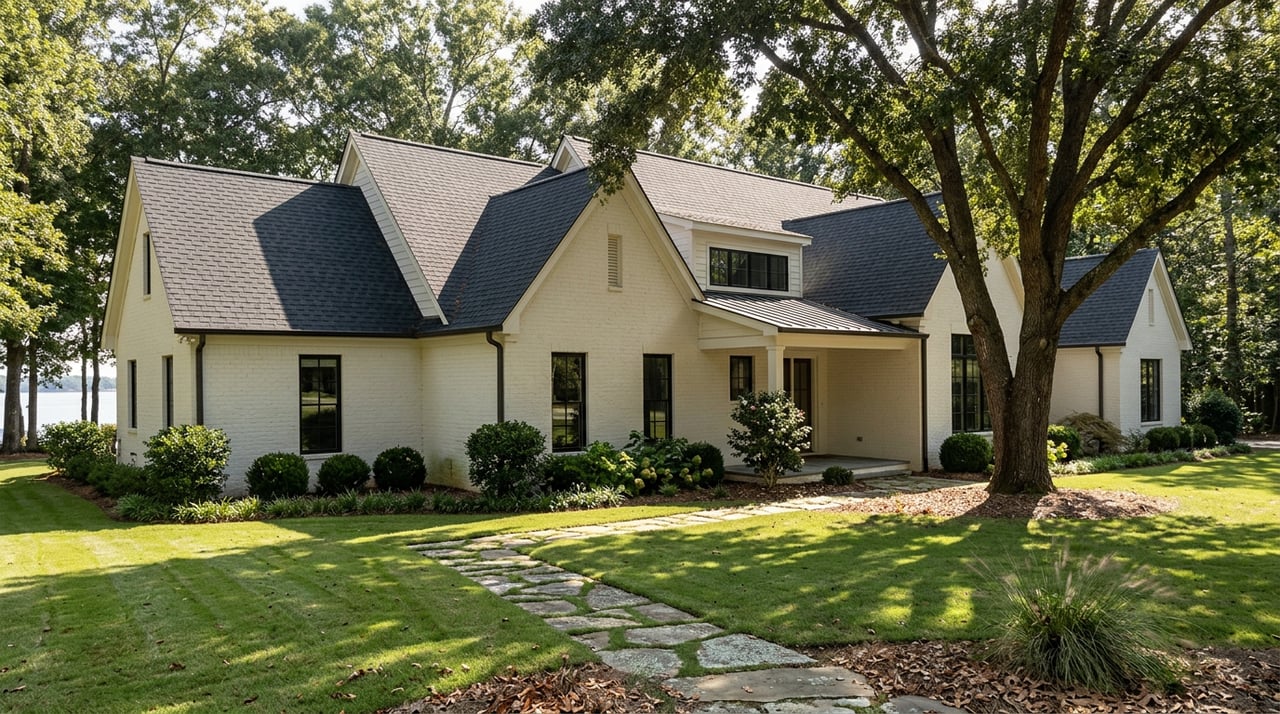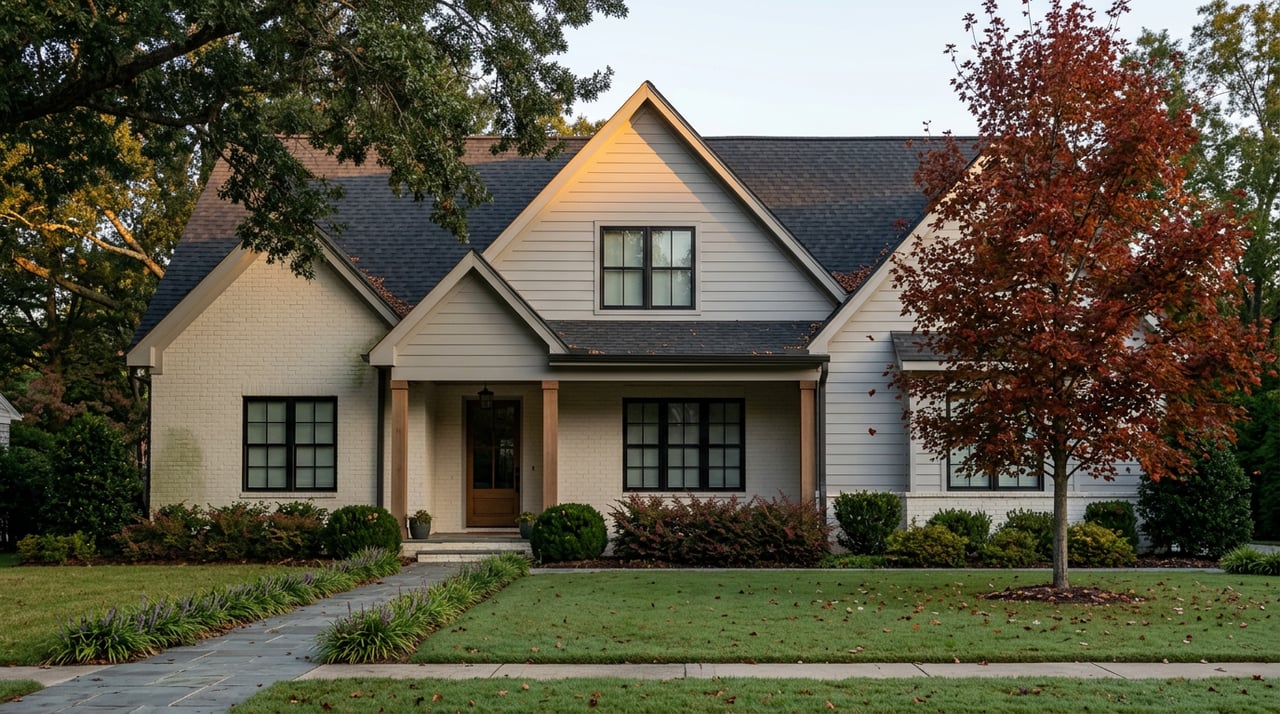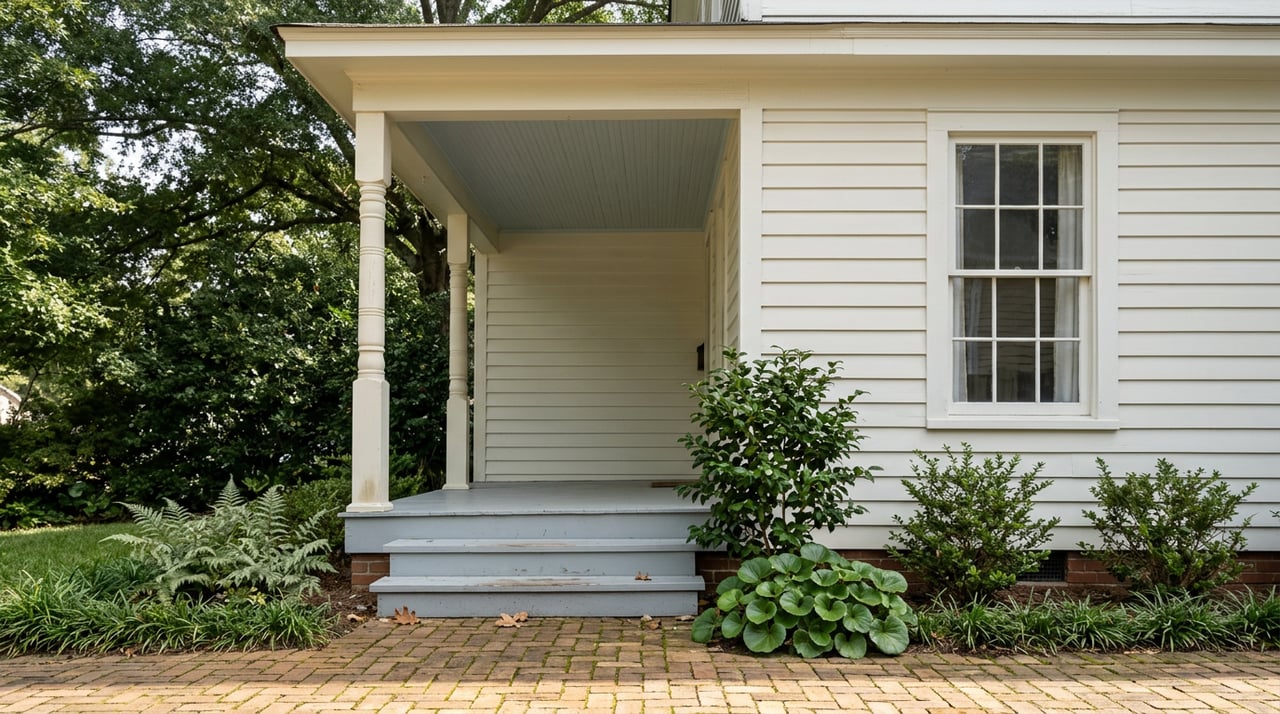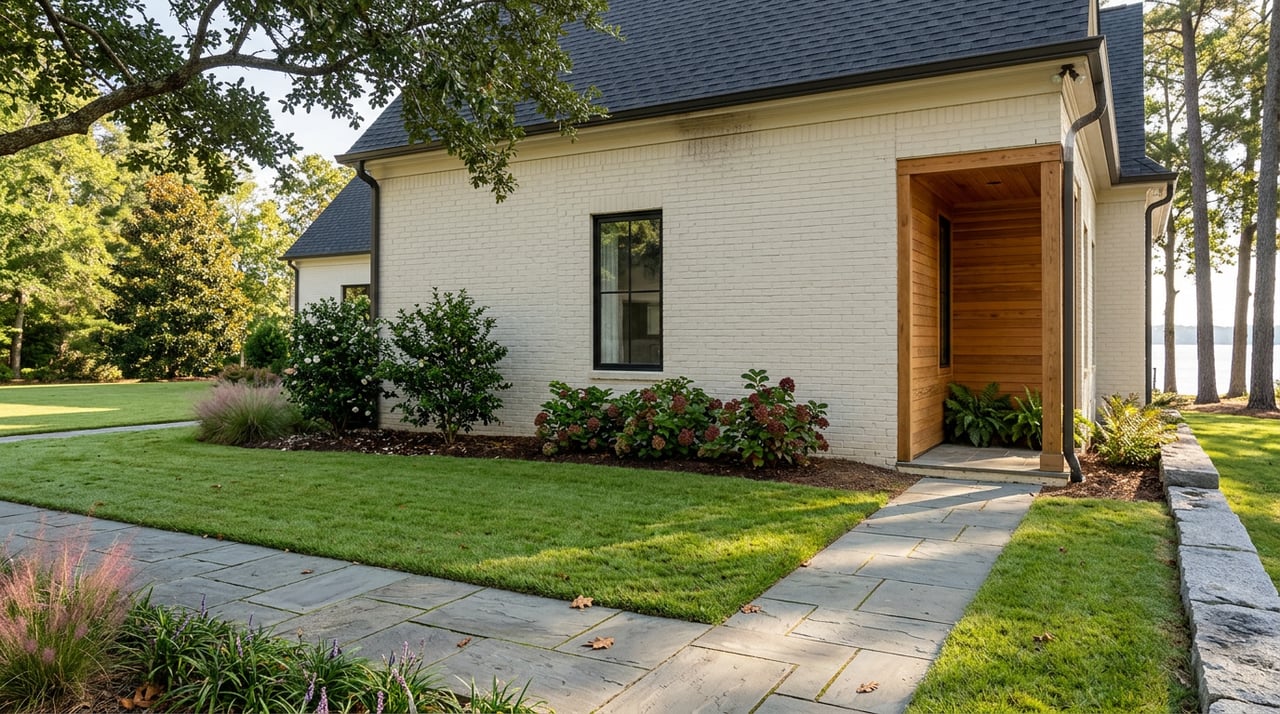
A buyer stands on a dock near Sugar Creek Marina in Buckhead, looking at a lot with 150 feet of shoreline and a house that checks every box. The only thing missing is covered boat storage. The buyer assumes that's a permitting question, something a contractor and a check can solve after closing. It is not. On Lake Oconee, whether you can ever build a boathouse depends less on your lot and your budget than on who signed the original agreement with Georgia Power, and whether that person, or their direct heir, still holds title.
That single fact reorganizes how two visually similar waterfront homes near Buckhead should be priced and compared. It is not covered on most listing sheets, and it rarely comes up until a buyer is already deep into due diligence.
The rule most people find out too late
Lake Oconee is a Georgia Power reservoir, created in 1979 when the company completed Wallace Dam on the Oconee River. Georgia Power still owns and manages the shoreline itself, separate from whatever you own on the deeded portion of your lot. Any dock, seawall, or boathouse sits on Georgia Power property under a permit the company controls.
For docks and seawalls, that permit process works roughly the way you'd expect: apply, meet the specifications, get approved. Boathouses are different. Georgia Power's own shoreline guidance states plainly that boathouses are not permitted on Lake Oconee except to original property owners, and only if they or their heirs still retain ownership of the property. A new boathouse can be built to replace or repair one that already exists under that lineage. It cannot be created from scratch by a buyer who is neither the original owner nor an heir, no matter how large the lot or how strong the offer.
Even for owners who qualify, the shoreline has to measure up. Lots platted after 2000 need at least 100 feet of straight-line shoreline, measured pin to pin, before any shoreline structure other than a seawall is considered. Lots platted before 2000 can qualify for a single-stall boathouse with as little as 75 feet of shoreline, and 100 feet or more opens the door to a double stall. Every boathouse, like every dock, has to sit at least 15 feet off the side lot lines, including where those lines project out into the water.
Put together, the rule does two things at once. It caps who can hold the right, and it caps how much shoreline you need to exercise it. A buyer evaluating a home near Buckhead needs to know where that specific parcel lands on both counts before assuming a boathouse is ever on the table.
Two markets on the same shoreline
This is where the economics get interesting. Most buyers price waterfront property the way they'd price anything else: newer construction and better finishes should command more per square foot than an older home on a comparable lot. On Lake Oconee, that assumption breaks down the moment a boathouse enters the picture.
A cottage built in the 1980s or 1990s, still owned by the family that built it or by their direct heirs, can carry a boathouse right that no amount of new construction spending can recreate next door. The newer home, built by a buyer with no connection to the original owner, can have a better kitchen, a better dock, a better view, and still lack access to a right the older home holds simply because of when it was built and who has kept it in the family. The value isn't really in the structure. It's in an ownership lineage that Georgia Power has frozen in place.
Lake Sinclair, separated from Oconee by the same Wallace Dam, handles this differently. Georgia Power's guidance for Sinclair permits covered boathouses more broadly, without the original-owner restriction that governs Oconee. Sinclair's tradeoff runs the other direction: boatlifts there generally have to sit under an approved boathouse roofline, and free-standing lifts are prohibited except in grandfathered cases. Oconee flips that. It is the only Georgia Power lake that permits free-standing boatlifts at all, allows up to two per private dock, and caps every private slip at a single 16-foot by 32-foot configuration. A buyer cross-shopping the two lakes isn't choosing between "more restrictive" and "less restrictive." They're choosing which restriction they'd rather live with: who can own a boathouse, or how a lift has to be housed.
What this looks like near Buckhead right now
As of late August 2026, MLS-based listing data for Buckhead's waterfront segment shows 16 homes on the market with a median listing price of $642,000 and a median of 133 days on the market. That spread, and that time on market, makes sense once you factor in how differently two comparable homes can be positioned depending on their boathouse status. A buyer touring homes near Sugar Creek Marina on Parks Mill Road or Blue Springs Marina on Blue Springs Drive, both public access points sitting inside Buckhead's own 30625 zip code, should expect the asking price to reflect not just the house and the dock, but whether the current owner's family history on the parcel carries a boathouse right forward.
It's worth separating this from shared amenities like The Boathouse at Harbor Club, a community marina down in Greensboro with boat fueling, a convenience store, and a shared dock. That's a resort-style facility available to residents of a broader development, not a private single-family boathouse governed by the original-owner rule. Confusing the two during a home search is an easy mistake, since both use the same word.
Buckhead itself sits in Morgan County, which layers its own requirements on top of Georgia Power's. Morgan County requires a building permit for any dock work and will require an erosion-control plan if the project disturbs more than an acre or falls within 200 feet of state waters. None of that replaces the Georgia Power step. It runs alongside it.
What to ask before you write an offer
For a buyer weighing two lakefront listings near Buckhead that look similar on paper, a few questions separate a durable asset from a house that happens to sit on the water:
- Is this lot deeded, or is it a Georgia Power lease lot? Lease lots typically run on 15-year renewable terms, with annual fees that market data for the area places roughly in the $800 to $1,500 range, on top of property taxes and insurance.
- When was the lot platted, and does the shoreline measure 75 feet or 100 feet pin to pin? That determines whether a single-stall or double-stall boathouse was ever possible on this parcel.
- If a boathouse already exists, is it currently permitted, and does the seller have the Georgia Power authorization on file? A structure built without one can create restoration requirements that slow or derail a closing.
- Has the property stayed within the original owner's family, or has it already changed hands to an unrelated buyer? That answer determines whether the boathouse right is still active or already expired.
These aren't questions a general home inspection answers. They live in Georgia Power's shoreline file for that specific parcel, and in the deed history.
This is precisely the kind of detail a certified appraisal treats as load-bearing rather than incidental. A boathouse right that transfers with a sale, or one that quietly expired years ago, changes what a comparable sale actually tells you about value. It's the difference between pricing a house and pricing everything that comes with it.
A few questions worth asking directly
If a home I'm buying already has a boathouse, does it come with the sale? The physical structure conveys with the property. Whether you'd be allowed to rebuild it if it were ever damaged or removed is a separate question, since that ability follows the original-owner-or-heir rule rather than automatically passing to a new buyer. Confirm the boathouse's current permit status before assuming it's a permanent fixture.
I inherited my parents' lake home. Does that make me an eligible heir? The right appears tied to a specific chain of title for a specific parcel. An heir generally only carries the right forward if it was already established for that property and the property has stayed within the family, not simply because the current owner inherited the house itself.
Is Lake Sinclair the same? No. Sinclair's guidance permits covered boathouses more broadly than Oconee does, but restricts free-standing boat lifts to grandfathered cases and generally requires lifts to sit under an approved roofline.
A lakefront purchase near Buckhead deserves the same scrutiny you'd give any high-value asset with fine print attached. If you're comparing waterfront listings and want to know what a specific parcel's shoreline history actually supports, the Howard McMichael Team can help you request an appraisal-backed home valuation before you write an offer, not after.